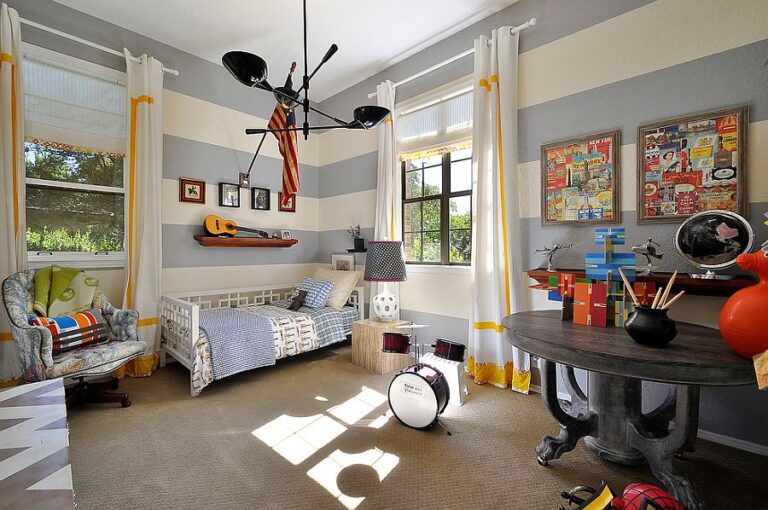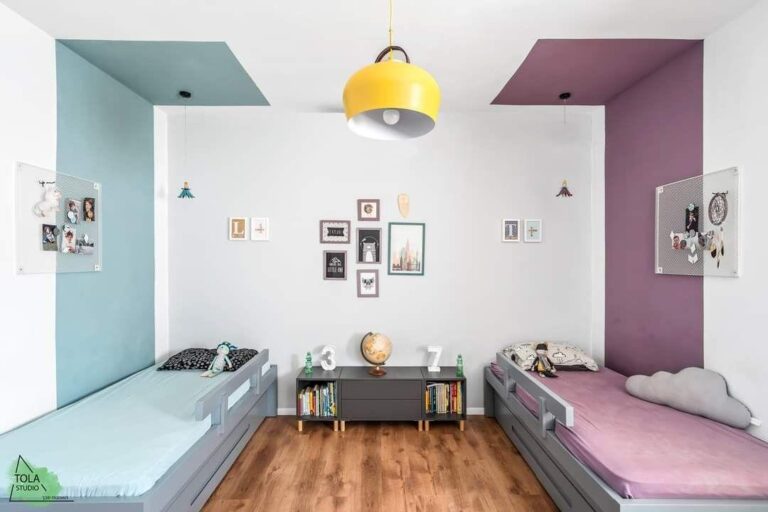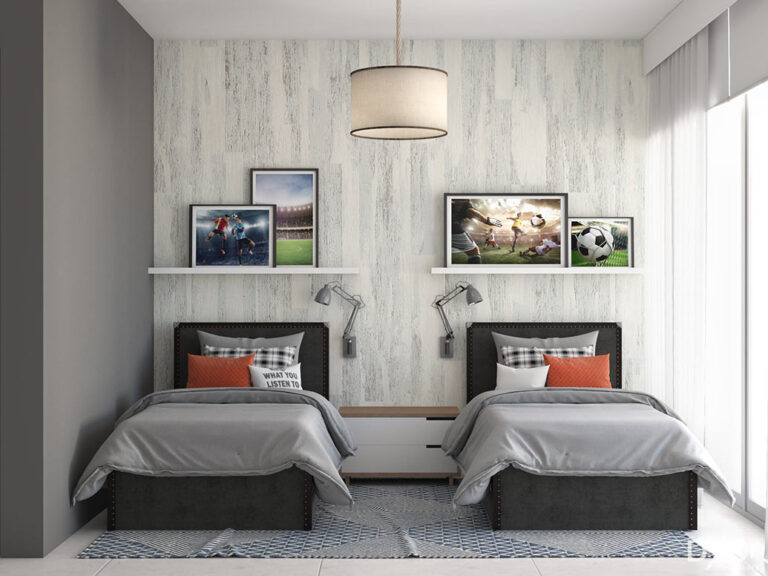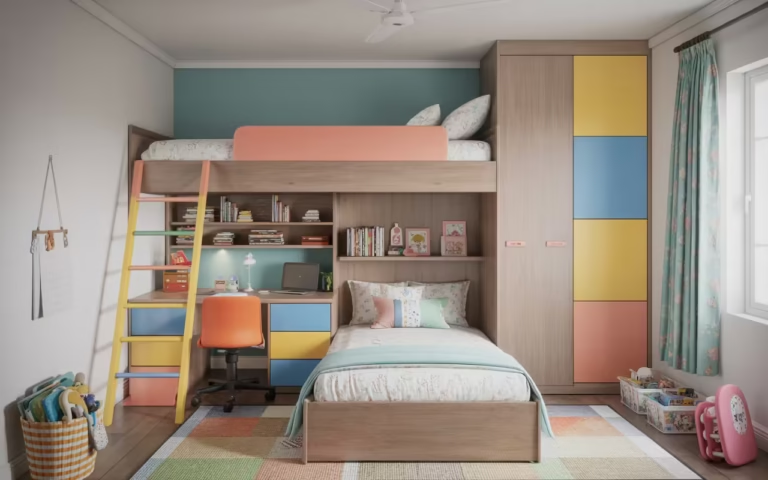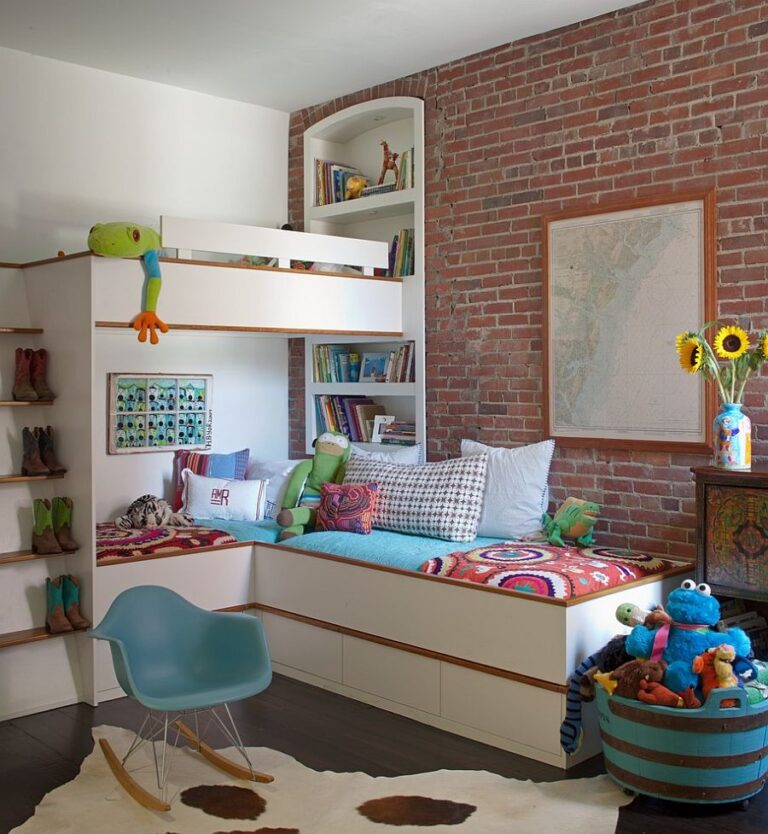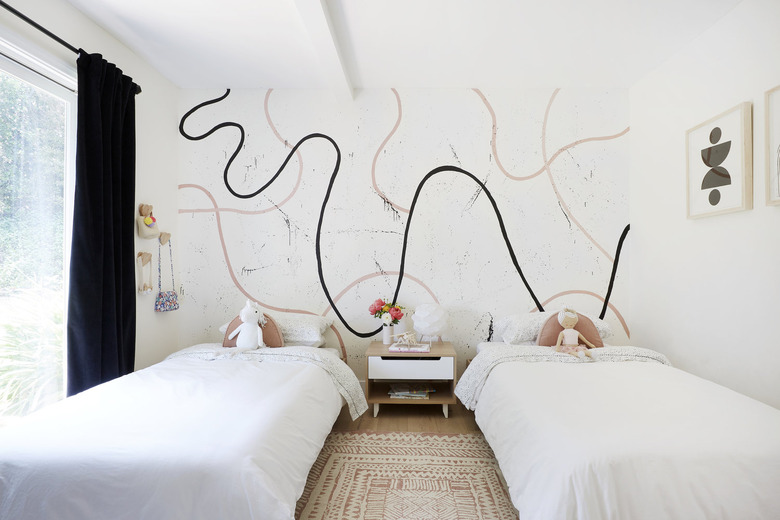
A minimalist kids’ room is designed to create a calm, organized, and functional environment where children can rest, play, learn, and grow without unnecessary distractions. By focusing on simple furniture, neutral color palettes, smart storage solutions, and thoughtfully chosen décor, minimalist design helps make even small bedrooms feel spacious and peaceful. The goal is not to remove personality but to create a balanced space where every item has a purpose. From hidden storage and low-profile beds to natural materials and uncluttered layouts, minimalist kids’ rooms encourage organization and independence while supporting a relaxing atmosphere that benefits both children and parents alike.
1. Neutral Color Palette with Soft Textures

A neutral color palette is the foundation of a minimalist kids’ room. Soft shades of white, beige, light gray, and warm cream create a calming atmosphere that feels spacious and timeless.
Layering textures through rugs, bedding, cushions, and woven baskets adds warmth without introducing visual clutter.
The restrained color scheme helps children feel relaxed while allowing decorative accents to stand out naturally. This approach creates a peaceful environment that supports both rest and focus.
2. Low Platform Bed with Hidden Storage

A low platform bed promotes a simple and uncluttered look while offering practical hidden storage underneath. Drawers built into the bed frame provide space for toys, clothing, and extra bedding without requiring additional furniture.
The low profile helps the room feel more open and balanced.
Combined with simple linens and minimal décor, the bed becomes a functional focal point. This design supports organization while maintaining a calm minimalist aesthetic.
3. Open Floor Space for Play and Movement

Minimalist design focuses on keeping only what is necessary. By reducing excess furniture and decorative items, more floor space becomes available for play, reading, and creative activities.
The open layout encourages movement and makes the room feel larger than its actual size.
Children benefit from a flexible environment where activities can change throughout the day. This simple approach creates a sense of calm while supporting everyday functionality.
4. Floating Shelves Instead of Large Bookcases

Floating shelves provide essential storage while maintaining a light and airy appearance. Unlike bulky bookcases, they utilize vertical wall space without overwhelming a small room.
A carefully curated selection of books, toys, and decorative objects keeps the display organized and intentional.
The clean lines contribute to the minimalist style while ensuring important items remain accessible. This storage solution balances practicality and visual simplicity.
5. Built-In Storage with Hidden Compartments

Built-in storage helps maintain a clutter-free environment by keeping belongings concealed behind doors and drawers. This approach creates clean surfaces and a more organized appearance throughout the room.
Matching finishes and streamlined hardware reinforce the minimalist aesthetic. This solution is ideal for families seeking both functionality and simplicity.
6. Simple Wooden Furniture with Clean Lines

Furniture with simple silhouettes and natural wood finishes creates a warm minimalist atmosphere. Clean lines help the room feel organized and timeless while avoiding unnecessary visual complexity.
Natural materials add texture and character without requiring bold patterns or bright colors.
The understated design allows furniture to remain functional while contributing to a calm environment. This style works beautifully in both modern and traditional homes.
7. Reading Nook with Minimal Décor

A minimalist reading nook creates a quiet retreat for relaxation and learning. A comfortable cushion, a few favorite books, and soft lighting are often all that is needed to establish a welcoming space.
The simplicity of the nook makes it easy to keep organized and enjoyable to use. It is a thoughtful addition to any minimalist children’s bedroom.
8. Monochromatic Color Scheme

A monochromatic palette creates visual harmony by using different shades of the same color throughout the room. This technique reduces visual clutter and promotes a calm, cohesive appearance.
Soft variations in bedding, rugs, storage bins, and wall colors add depth without overwhelming the space.
The consistent palette creates a soothing environment that feels balanced and elegant. It is a popular strategy in minimalist interior design.
9. Wall-Mounted Desk for a Clutter-Free Look

A wall-mounted desk provides a dedicated workspace while preserving valuable floor space. Its floating design contributes to the open and uncluttered appearance that defines minimalist interiors.
Paired with a few essential storage shelves, the desk remains functional without dominating the room. The streamlined arrangement encourages organization and productivity. This solution is ideal for school-age children who need a practical study area.
10. Natural Light as a Design Feature

Natural light plays a major role in minimalist design by making rooms feel brighter, larger, and more welcoming. Keeping window treatments simple allows sunlight to become part of the overall design.
The increased brightness enhances neutral colors and highlights natural materials throughout the room.
A well-lit environment feels calm and uplifting while reducing the need for excessive decoration. This simple strategy dramatically improves the atmosphere of a children’s space.
11. Organized Toy Rotation System

A toy rotation system keeps only a limited number of toys accessible at one time while storing the rest out of sight. This reduces clutter and helps maintain the clean appearance associated with minimalist design.
Children often engage more deeply with fewer toys, making playtime more meaningful.
Hidden storage bins make rotating items simple and efficient. This organizational strategy supports both simplicity and functionality in a child’s room.
12. Minimal Wall Art with Meaningful Accents

A few carefully chosen prints, photographs, or illustrations create visual interest without overwhelming the room.
Meaningful artwork helps personalize the space while maintaining a calm and uncluttered atmosphere. Simple frames and cohesive colors reinforce the minimalist aesthetic. This approach ensures the room feels warm and inviting while staying true to its clean design principles.
13. Low Open Shelving for Easy Access

Low open shelving keeps everyday items accessible while maintaining a clean and organized appearance. Instead of filling the room with oversized furniture, a few carefully selected shelves provide space for books, toys, and baskets.
The lower height encourages independence by allowing children to reach and organize their belongings easily.
Keeping only essential items on display prevents visual clutter and supports the calm atmosphere that defines minimalist design. This approach balances practicality with simplicity.
14. Floor Bed with Natural Materials

A floor bed creates a relaxed and grounded atmosphere that aligns perfectly with minimalist principles. The low-profile design makes the room feel more spacious while eliminating the need for bulky bed frames.
Natural wood, cotton bedding, and neutral tones enhance the calming effect. The simplicity encourages a clutter-free environment and creates a sense of openness.
This style works especially well in smaller bedrooms where visual simplicity is important.
15. Hidden Toy Storage Behind Cabinet Doors

One of the easiest ways to maintain a minimalist room is by keeping toys out of sight when not in use. Cabinets with closed doors instantly reduce visual clutter and create a more peaceful environment.
Storage bins inside the cabinets help categorize items while making cleanup easier.
The concealed storage allows the room to look organized even during busy weeks. This solution supports both functionality and a clean aesthetic.
16. Simple Canopy Over the Bed

A lightweight canopy can add warmth and character without overwhelming a minimalist room. Soft neutral fabrics create a cozy sleeping area while maintaining the room’s calm atmosphere.
The canopy acts as a subtle focal point and introduces texture without requiring additional decorative items.
Combined with simple bedding and uncluttered surroundings, it creates a peaceful retreat that feels both stylish and comforting.
17. Built-In Wall Niches for Display

Built-in wall niches provide storage and display space without protruding into the room. Their recessed design keeps the layout clean while offering a place for books, small toys, and meaningful decorative objects.
The architectural detail adds visual interest without requiring excessive decoration. Carefully curating the displayed items ensures the room remains organized and uncluttered. Wall niches are both practical and aesthetically pleasing.
18. Soft Beige and White Color Scheme

A soft beige and white palette creates a timeless and soothing environment.
These warm neutrals reflect natural light beautifully and make even compact rooms feel open and airy.
The restrained color scheme allows textures and natural materials to take center stage.
Woven baskets, linen bedding, and wooden furniture add depth without disrupting the minimalist aesthetic. This combination promotes relaxation and visual harmony.
19. Compact Desk with Hidden Cable Management

A compact desk with built-in storage and concealed cable management helps maintain a tidy workspace. Visible cords and scattered supplies can quickly disrupt a minimalist design, so organization is key.
Wall-mounted shelves and simple storage boxes keep school essentials organized without overwhelming the area. The result is a clean, focused study space that encourages productivity while preserving the room’s calm atmosphere.
20. Woven Baskets for Stylish Organization

Woven baskets provide practical storage while introducing natural texture to a minimalist room. They can hold toys, blankets, books, and clothing without creating visual clutter.
Matching baskets create a cohesive appearance and blend seamlessly into neutral color schemes.
Their soft organic look helps make the room feel warm and inviting while supporting effective organization. This simple storage solution is both functional and decorative.
21. Minimalist Shared Bedroom Layout

A shared bedroom can still feel calm and uncluttered with a minimalist approach. Matching beds, coordinated storage, and a consistent color palette help create visual harmony throughout the space.
Personalized details can be incorporated subtly through bedding or artwork without overwhelming the design.
The balanced arrangement promotes organization while giving each child a comfortable and functional area of their own.
22. Large Area Rug as the Main Design Feature

Instead of relying on numerous decorative accessories, a large area rug can become the room’s primary design statement. A soft neutral rug defines the space while adding comfort and warmth underfoot.
The rug creates visual interest through texture rather than bold patterns or colors. This minimalist approach keeps the room feeling open while making it more comfortable for play, reading, and relaxation.
23. Wall Hooks Instead of Extra Furniture

Wall hooks offer a simple solution for organizing backpacks, jackets, hats, and accessories without requiring additional furniture.
By using vertical space efficiently, the room remains uncluttered and easy to navigate.
Minimalist hook designs blend seamlessly into the décor while providing everyday functionality. Keeping frequently used items off the floor helps maintain the room’s clean and organized appearance throughout the day.
24. Nature-Inspired Minimalist Décor

Nature-inspired décor introduces warmth and personality while remaining true to minimalist principles. Botanical artwork, wooden accents, linen textiles, and subtle earth tones create a peaceful and inviting environment.
The connection to natural materials helps the room feel grounded and timeless. Rather than relying on excessive decorations, a few thoughtfully selected pieces provide character and visual balance. This approach creates a calm space that feels both modern and welcoming.
Creating a minimalist kids’ room is about designing a space that feels peaceful, practical, and visually balanced. By reducing clutter, incorporating smart storage, and choosing furniture with clean lines and multiple functions, it becomes easier to maintain an organized environment that supports everyday life.
Neutral colors, natural materials, and carefully selected decorative accents help create warmth without overwhelming the room. Whether the bedroom is large or small, minimalist design allows children to focus on play, learning, and relaxation in a comfortable setting.
These minimalist kids’ room ideas demonstrate that simplicity and style can work together to create a timeless space that grows beautifully with your child.