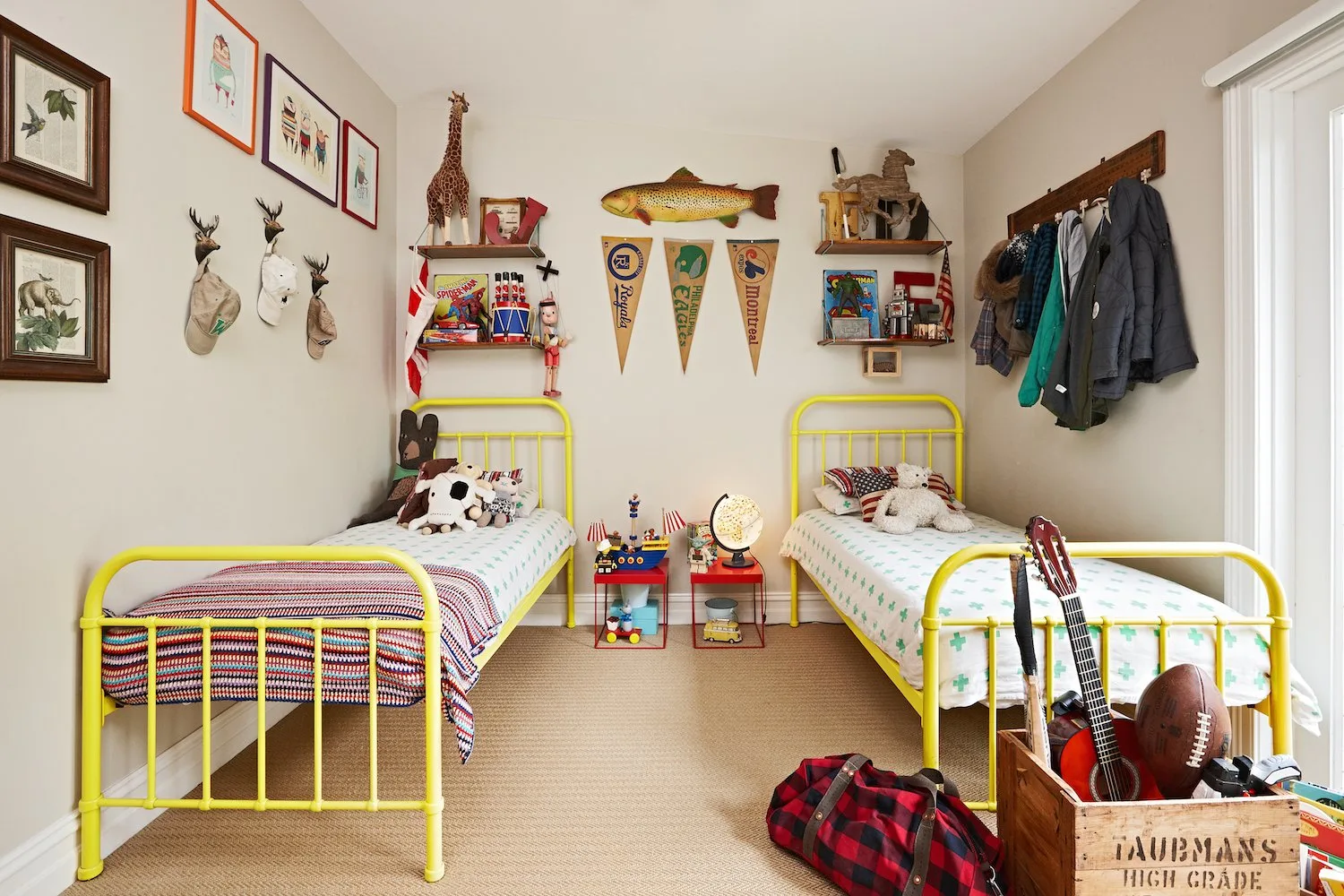
Designing a shared kids’ bedroom that feels modern, organized, and comfortable for multiple children can be challenging, especially when each child wants their own sense of space and personality.
The best shared rooms combine smart layouts, stylish storage, and thoughtful decor choices that help siblings live together more comfortably without sacrificing individuality.
From personalized bed zones and divider shelving to cozy reading corners and creative study setups, modern shared bedrooms can feel functional while still looking beautifully designed.
These ideas focus on balancing privacy, storage, and style in ways that make the room feel spacious, welcoming, and practical for everyday family life while giving each child a place that feels uniquely theirs.
1. Twin Beds with Personalized Wall Panels

Twin beds with personalized wall panels help create individual zones while keeping the room visually balanced. Use painted arches, wallpaper sections, or wooden panels behind each bed to give both children their own unique sleeping area without separating the room completely.
Matching bed frames maintain harmony while different colors, artwork, or bedding allow personality to shine through naturally. Soft lighting and layered textures help the room feel warm and modern rather than overly themed.
This setup creates a stylish shared room where both children feel included while still having their own defined personal space.
2. Shared Room with Divider Shelving

Divider shelving is a smart way to separate a shared kids’ bedroom while still keeping the room open and functional. Open shelves can divide sleeping or study zones while providing storage for books, toys, baskets, and decor.
Because the shelves don’t fully block the room, the space still feels airy and connected. Matching baskets and coordinated decor help both sides feel cohesive while allowing each child to personalize their section.
This idea works especially well in modern bedrooms where maximizing both storage and personal space is equally important.
3. Matching Loft Beds with Private Corners

Matching loft beds instantly create separate personal zones while maximizing valuable floor space in a shared room. Underneath each loft, children can have their own desk, reading nook, or relaxation area designed around their interests.
Personal lighting, cushions, artwork, and storage help make each section feel customized and comfortable. Keeping the bed frames identical maintains a clean and balanced overall design throughout the room.
This setup combines style, organization, and privacy while helping siblings share the space more comfortably every day.
4. Opposite Color Zones

Opposite color zones give each child a sense of individuality while still creating a stylish modern bedroom. Use complementary colors like sage and terracotta, navy and mustard, or blush and olive to visually separate each child’s side of the room.
Matching rugs, shelves, or furniture help tie both sections together naturally. This approach allows siblings to express different personalities without making the room feel chaotic or disconnected.
Color zoning is a simple but highly effective way to balance shared living with personal identity in one space.
5. Built-In Bunk Beds with Individual Lighting

Built-in bunk beds create a cozy and space-saving setup while still allowing each child their own comfortable sleeping zone. Adding individual reading lights, shelves, and small storage cubbies helps personalize each bunk without requiring extra floor space.
Warm lighting and soft bedding make the room feel inviting and modern instead of cramped. Neutral tones mixed with colorful accents keep the overall design balanced and playful.
This layout works especially well for smaller shared bedrooms where maximizing functionality is essential.
6. Shared Bedroom with Matching Study Stations

Matching study stations help create equal and organized workspaces for siblings inside a shared bedroom. Long desks with separate storage drawers, shelves, and lighting allow each child to focus independently while maintaining a cohesive room design.
Adding pegboards, corkboards, or wall organizers above each desk helps personalize the setup without creating clutter. Coordinated chairs and decor details keep the room looking polished and intentional.
This idea balances practicality and style while encouraging better organization and study habits for both children.
7. Curtain Dividers Around Beds

Curtain dividers create instant privacy while adding softness and texture to a shared kids’ room. Hanging curtains around beds or specific corners helps each child enjoy quiet personal space without needing permanent walls or partitions.
Choose playful patterns, textured fabrics, or warm neutral tones that complement the room’s color palette. Soft lighting inside each section can make the sleeping areas feel even more cozy and comforting.
This idea works beautifully for siblings with different schedules or personalities who still share the same room daily.
8. Shared Room with Dual Reading Nooks

Dual reading nooks create relaxing personal corners where siblings can unwind independently inside the same room. Use bean bags, cushions, floor lamps, and bookshelves to design two cozy spots that feel equally comfortable and inviting.
Position the nooks near windows or opposite corners to help create stronger separation between spaces. Personalized pillows, baskets, and artwork can make each nook feel unique while still coordinating with the room overall.
This setup encourages quiet time while making the bedroom feel more spacious, functional, and thoughtfully designed.
9. Sliding Panel Shared Bedroom

Sliding panels offer flexible privacy in shared bedrooms without permanently dividing the room. Lightweight wood panels, frosted dividers, or modern sliding screens can separate sleeping and study zones whenever needed.
When opened, the room still feels spacious and connected for shared activities and playtime. Coordinated colors and matching furniture help maintain a cohesive overall design despite the divided sections.
This modern solution works especially well for older siblings who want more personal space while still comfortably sharing one room.
10. Symmetrical Shared Bedroom Layout
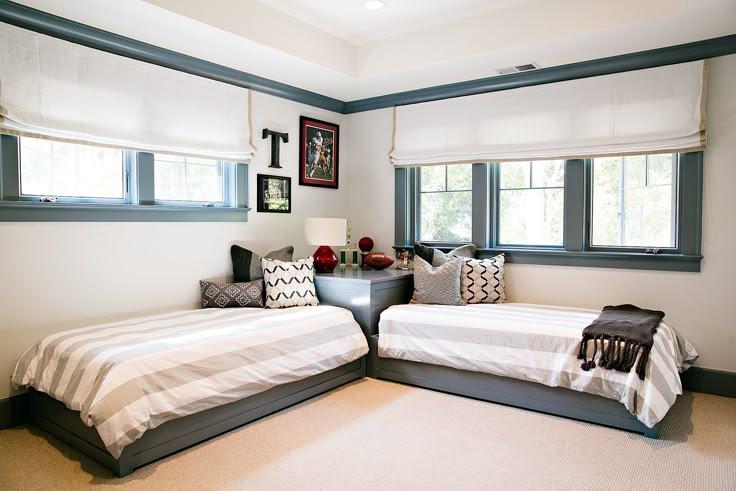
A symmetrical room layout instantly creates a sense of balance and fairness in a shared bedroom. Matching beds, rugs, lighting, and storage placed evenly throughout the room help prevent the space from feeling cluttered or uneven.
Even with symmetrical furniture, personalized bedding, wall art, or accent colors can help each child maintain individuality. Layered textures and warm lighting soften the overall look and keep the room feeling comfortable.
This timeless layout feels organized, visually calming, and highly functional for siblings sharing a modern bedroom.
11. Shared Room with Personalized Ceiling Decor

Personalized ceiling decor is a creative way to give each child their own visual space inside a shared bedroom. Painted ceiling sections, hanging lights, stars, canopies, or decorative mobiles above each bed help define personal zones without taking up floor space.
Keeping the wall colors neutral allows the ceiling details to stand out while maintaining a modern and balanced atmosphere. Coordinated bedding and soft textures help connect the overall design naturally.
This idea adds personality and creativity while making each child feel like they have a space that truly belongs to them.
12. Shared Bedroom with Matching Window Seats

Matching window seats create cozy personal corners while keeping a shared bedroom visually balanced and functional. Adding cushions, blankets, and hidden storage underneath each seat helps maximize comfort without taking up additional floor space.
Positioning the seating areas near natural light makes them perfect for reading, relaxing, or quiet activities throughout the day. Personalized pillows or small shelves nearby can help each child feel ownership over their individual nook.
This idea adds warmth, style, and practicality while helping siblings enjoy separate spaces within the same room.
13. Shared Room with Statement Ceiling Paint

Statement ceiling paint adds personality and visual separation without taking up valuable wall or floor space. Different ceiling colors or painted sections above each bed can help define personal zones while still maintaining a modern and cohesive room design.
Soft lighting and neutral furniture help balance the bold ceiling details naturally. Coordinated rugs and bedding can connect both sides of the room while allowing each child’s area to feel unique.
This creative design choice makes a shared bedroom feel more customized, stylish, and visually interesting.
14. Shared Room with Back-to-Back Beds
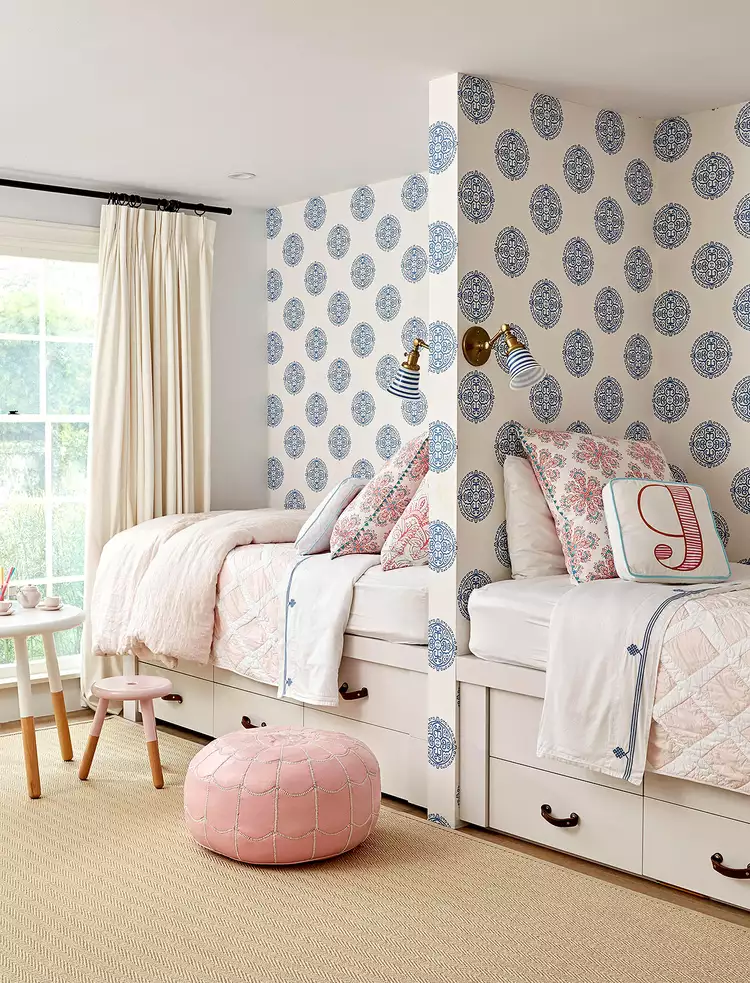
Back-to-back bed layouts help create privacy while keeping the shared room open and practical. Positioning the beds with headboards facing opposite directions naturally divides the space and gives each child a stronger sense of independence.
Add rugs, wall art, or small shelves around each bed to personalize the separate areas without overcrowding the room. Neutral walls paired with colorful accents help maintain a modern and balanced atmosphere.
This setup works especially well in larger bedrooms where flexible layouts can improve comfort and organization.
15. Shared Bedroom with Dual Pegboards

Dual pegboards above desks or beds create organized and personalized storage for each child inside a shared room. Hooks, baskets, mini shelves, and artwork displays help keep supplies accessible while reducing clutter around the bedroom.
Painting the pegboards in different colors allows siblings to personalize their sections while still maintaining a cohesive overall design. This setup is especially useful for school supplies, crafts, books, or small decorative items.
It’s a practical and stylish solution that combines storage, creativity, and individuality in one modern design feature.
16. Shared Bedroom with Layered Lighting Zones

Layered lighting helps create separate atmospheres within a shared kids’ room while improving functionality throughout the day. Combine ceiling lights, bedside lamps, wall sconces, and fairy lights to give each child more control over their personal space.
Warm lighting near beds creates a relaxing nighttime atmosphere, while focused desk lighting helps with homework and reading. Matching fixtures keep the room feeling visually connected even when the lighting setups differ slightly.
This thoughtful design detail adds comfort, flexibility, and a cozy modern feel to the entire room.
17. Shared Bedroom with Central Storage Wall

A central storage wall creates structure and organization while helping divide a shared bedroom more naturally. Tall shelves, cubbies, drawers, and closed cabinets provide equal storage for both children without making the room feel crowded.
Matching baskets and labels help keep the setup neat and visually cohesive. Decorative shelves can also display books, artwork, or favorite toys to add personality to the space.
This practical design idea improves functionality while helping each child maintain their own organized section within the shared room.
18. Shared Room with Hanging Bedside Shelves

Hanging bedside shelves are a modern alternative to bulky nightstands in shared bedrooms where floor space matters. Small floating shelves beside each bed provide room for books, lamps, toys, or water bottles while keeping the layout clean and open.
Using matching shelf designs helps maintain symmetry while allowing siblings to decorate their own shelves differently. Warm lighting and layered bedding can help soften the modern look and make the room feel cozy.
This simple idea keeps essentials organized while making the room feel more spacious and thoughtfully designed.
19. Shared Bedroom with Coordinated Patterns

Coordinated patterns help a shared bedroom feel lively and connected without making the design overwhelming. Use stripes, checks, florals, or geometric prints across bedding, rugs, curtains, and cushions while sticking to a consistent color palette.
This approach allows each child’s side to feel slightly different while still maintaining harmony throughout the room. Layered textures and neutral furniture help balance the stronger patterns naturally.
The result is a playful but polished shared space that feels modern, inviting, and visually cohesive.
20. Shared Room with Personalized Wall Hooks

Personalized wall hooks are a simple but effective way to help siblings organize their belongings while creating stronger personal zones inside a shared room. Each child can have their own hooks for backpacks, jackets, hats, or accessories near their bed or study area.
Colorful designs, labels, or playful shapes help make the hooks feel decorative as well as practical. Matching layouts keep the room visually balanced while still allowing for individuality.
This small detail improves organization and helps shared spaces feel more functional for everyday routines.
21. Shared Bedroom with Cozy Floor Lounge Area
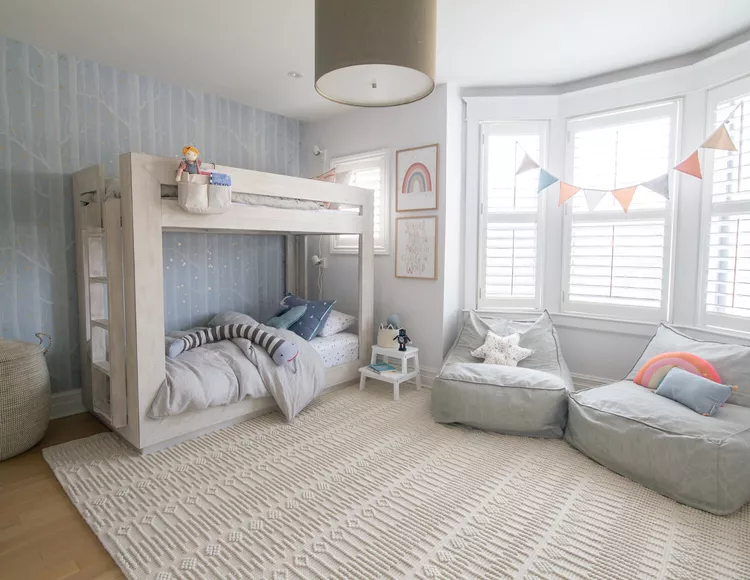
A floor lounge area creates a comfortable shared zone where siblings can relax, play games, read, or spend time together. Use oversized cushions, bean bags, layered rugs, and soft lighting to create a cozy atmosphere without needing large furniture pieces.
Position the lounge area in the center of the room or near a window to maximize openness and comfort. Coordinated pillows and textures help the setup feel modern and visually connected to the rest of the room.
This shared hangout space encourages connection while making the bedroom feel more welcoming and functional.
22. Shared Bedroom with Mixed Texture Decor

Mixing textures throughout a shared kids’ bedroom adds warmth and depth while helping the room feel professionally styled. Combine soft rugs, woven baskets, wood furniture, layered bedding, velvet cushions, and textured curtains to create a cozy and visually balanced atmosphere.
Neutral foundations paired with colorful accents help the textures stand out without making the room feel too busy. Each child can personalize their own bedding or decor details while still maintaining a cohesive overall design.
This approach creates a shared bedroom that feels comfortable, stylish, and full of personality without relying on heavy themes.
A thoughtfully designed shared kids’ room can help siblings feel comfortable, organized, and connected while still allowing room for individuality and personal expression. Smart furniture layouts, layered lighting, personalized decor, and creative storage solutions all help make shared spaces feel more functional and visually balanced.
The key is designing separate zones for sleeping, relaxing, studying, and storage without overcrowding the room or making it feel divided. Whether the space is large or compact, modern shared bedroom ideas can create harmony while still reflecting each child’s unique personality and interests. With the right design choices, a shared room can become a stylish and enjoyable space both children truly love spending time in.