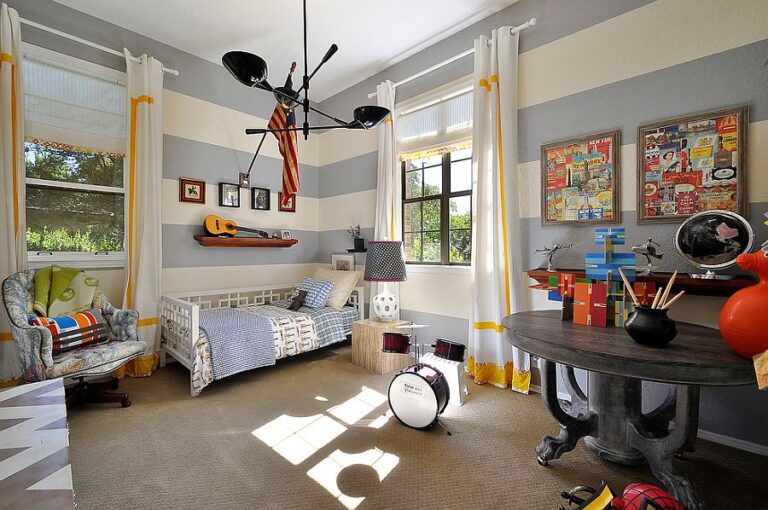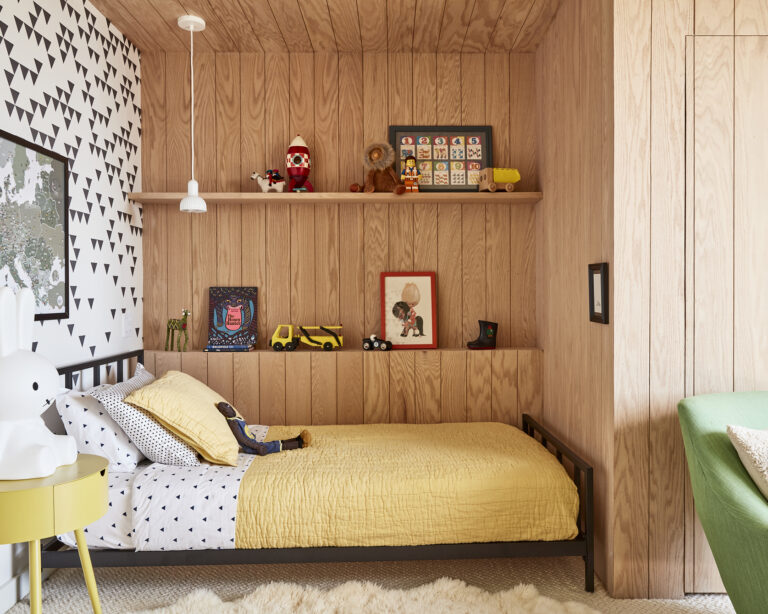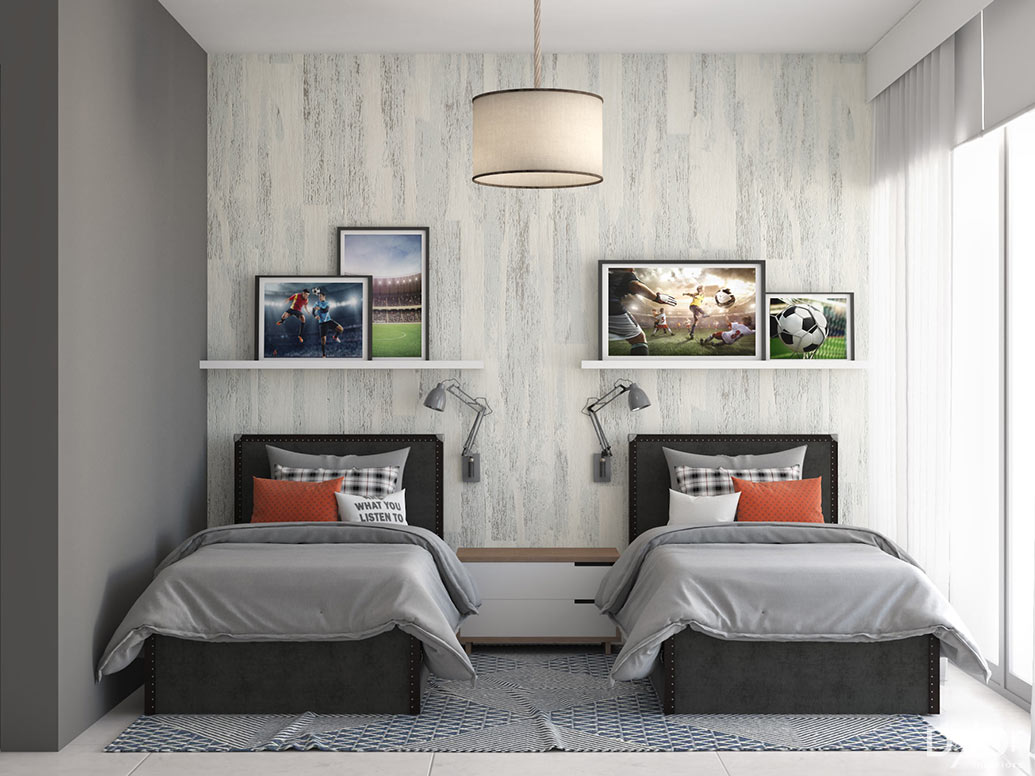
Designing a shared kids’ bedroom can feel challenging, especially when trying to balance style, storage, comfort, and each child’s personality in one space. The best shared rooms combine smart layouts with creative decor ideas that help siblings feel connected while still giving them a sense of individuality.
From bunk beds and built-in storage to personalized color palettes and cozy reading corners, thoughtful design choices can make shared bedrooms feel spacious, functional, and visually balanced. Whether siblings share similar interests or completely different styles, these shared kids room ideas offer practical inspiration for creating a room that encourages harmony, supports everyday routines, and still feels playful, stylish, and welcoming for everyone involved.
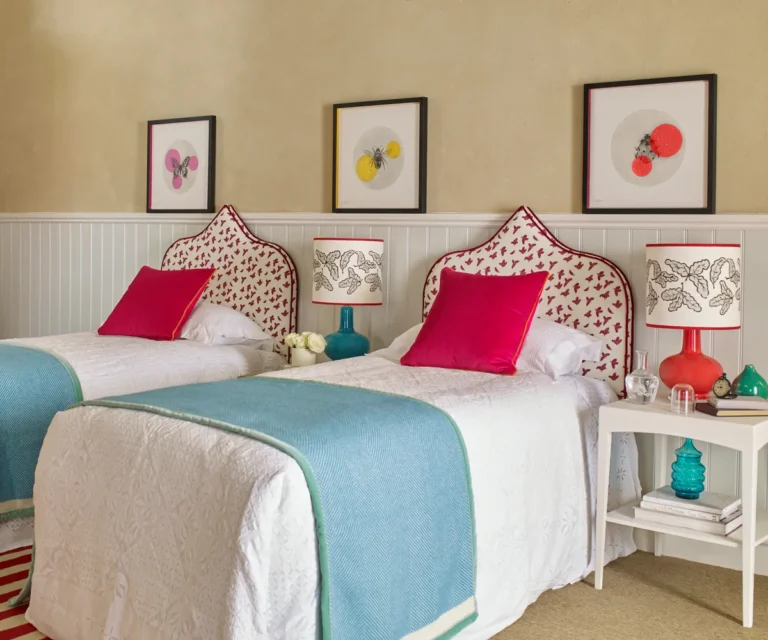
1. Matching Beds with Individual Color Themes

Matching beds help a shared kids’ room feel balanced and visually organized while still allowing each child to express personality through color. Use identical bed frames but style them with different bedding, pillows, or wall art so each sibling has their own distinct corner.
This approach keeps the room cohesive without making it feel overly uniform or boring. Soft blues, greens, coral tones, mustard shades, or playful patterns can help separate spaces naturally while still working together overall.
It’s a simple way to create harmony in a shared room while making both children feel equally included.
2. Built-In Bunk Beds with Storage

Built-in bunk beds are one of the smartest ways to maximize space in a shared kids’ room. They free up valuable floor space while creating a cozy sleeping setup that feels custom-designed and practical for siblings.
Adding built-in shelves, drawers, or cubbies around the bunks helps keep toys, books, and clothes organized without overcrowding the room. Personalized bedding or reading lights can make each bunk feel more individual and comfortable.
This setup works especially well in smaller bedrooms where storage and layout flexibility are equally important.
3. Shared Study Wall

A shared study wall creates a functional workspace where siblings can do homework, crafts, or creative activities together. Long desks with separate chairs help define personal work areas while keeping the overall design streamlined and organized.
Wall shelves, pegboards, and labeled storage bins help reduce clutter while keeping school supplies easy to reach. Choose coordinated chairs or matching desk lamps to create a polished designer-inspired look.
This setup encourages productivity while making the room feel balanced, practical, and thoughtfully designed for shared everyday use.
4. Half and Half Wall Design

A half-and-half wall design gives each sibling their own sense of identity without making the room feel disconnected. Divide the room visually using paint colours, wallpaper, or artwork that reflects each child’s personality and interests.
The key is choosing colours that complement one another so the room still feels cohesive overall. Matching furniture and rugs can help tie both sides together naturally.
This idea works especially well when siblings have different tastes but still need a room that feels stylish and balanced.
5. Loft Beds With Play Space Below

Loft beds create extra floor space that can be transformed into play zones, reading corners, or study setups underneath. In a shared room, this layout helps prevent the space from feeling cramped while giving each child more room to move around comfortably.
Add bean bags, rugs, shelves, or small desks beneath the lofts to create functional zones for different activities. Personalized decor and lighting can help each sibling feel connected to their own area.
This setup combines practicality with fun while making the room feel creative and spacious.
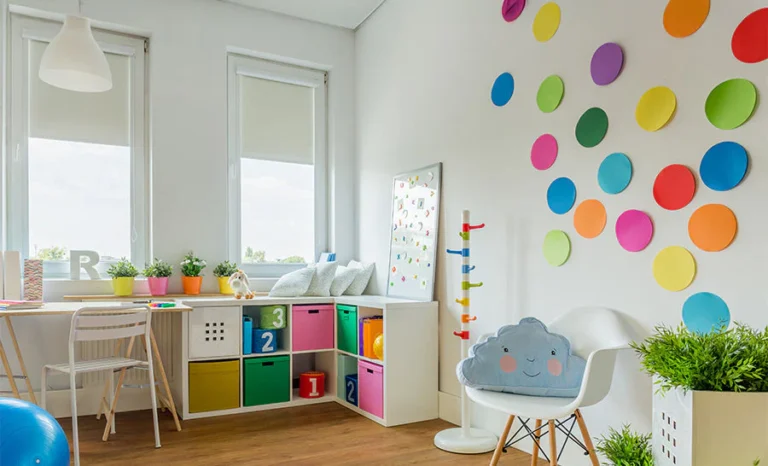
6. Neutral Base with Colorful Accents

Using a neutral base makes a shared kids’ room feel calmer and more versatile while allowing colorful accents to bring personality into the space. Soft wall colours paired with vibrant bedding, artwork, rugs, and cushions create a playful but balanced atmosphere.
This design approach prevents the room from feeling visually overwhelming, especially in smaller shared spaces. Bright accessories can easily be updated as children grow or develop new interests.
A neutral foundation also helps the room feel more timeless and cohesive despite having multiple personalities sharing the same space.
7. Privacy Curtains Around Beds

Privacy curtains give siblings their own cozy retreat within a shared bedroom while adding softness and texture to the design. Curtains around bunk beds or individual sleeping areas help create personal space for reading, relaxing, or quiet time.
Choose playful prints, warm neutrals, or rich colors that complement the room’s overall palette. Soft lighting inside each section can make the setup feel extra comfortable and inviting.
This idea is especially helpful for siblings with different schedules or personalities who still want moments of privacy in a shared environment.
8. Coordinated Gallery Wall

A coordinated gallery wall helps unify a shared bedroom while still showcasing each child’s personality. Mix framed artwork, photos, playful typography, and colorful prints that reflect both siblings’ interests and hobbies.
Keeping the frames or layout consistent helps the wall feel organized rather than cluttered. Add shelves or clipboards so artwork can easily be rotated over time.
This decor idea brings warmth and individuality into the room while helping the entire space feel more intentional and professionally styled.
9. Shared Reading Nook

A shared reading nook creates a calming space where siblings can relax together with books, games, or quiet activities. Use oversized cushions, layered rugs, low bookshelves, and warm lighting to make the area feel inviting and comfortable.
Position the nook near a window or unused corner to maximize space efficiently. Adding separate baskets for each child’s favorite books helps keep the area organized while giving both siblings a sense of ownership.
This cozy addition encourages reading habits while making the shared room feel more functional and welcoming.
10. Smart Storage Under Every Bed

Smart under-bed storage is essential in shared kids’ rooms where keeping clutter under control can quickly become challenging. Rolling drawers, labeled bins, and pull-out baskets provide hidden storage without taking up additional floor space.
Assigning separate storage sections for each sibling helps maintain organization and reduces arguments over belongings. Matching storage containers also help the room feel cleaner and more visually cohesive.
This practical idea keeps toys, clothes, bedding, and school supplies organized while helping the room feel spacious, tidy, and easier to manage every day.
11. Double Canopy Bed Setup

Double canopy beds make a shared bedroom feel cozy, playful, and visually balanced. Matching canopies above each bed create symmetry while still allowing each child to personalize bedding, pillows, or wall decor around their space.
Soft fabrics and warm lighting make the room feel calm and inviting without looking overly themed. Neutral canopies paired with colorful accents help keep the overall design stylish and flexible as children grow older.
This setup adds texture and comfort while giving both siblings their own special sleeping area inside the shared room.
12. Shared Room with a Central Play Table

A central play table creates a shared activity zone where siblings can draw, build, craft, or play games together. Positioning the table in the middle of the room helps encourage interaction while keeping toys and activities organized in one designated area.
Use baskets, rolling carts, or wall shelves nearby for easy cleanup and accessible storage. Matching chairs and playful lighting can help the space feel more polished and intentional.
This idea works especially well in larger shared bedrooms where creating separate functional zones helps the room feel balanced and practical.
13. Opposite Wall Bed Layout

Placing beds on opposite walls helps create personal space for each sibling while making the room feel more open and organized. This layout works especially well when children have different personalities or schedules and need a stronger sense of independence.
Adding matching rugs, coordinated lighting, or similar furniture pieces keeps the room visually connected despite the separated sleeping areas. Shared artwork or central storage can help tie everything together naturally.
This arrangement creates a balanced layout that feels practical, comfortable, and easy to personalize for both children.
14. Color-Blocked Shared Bedroom
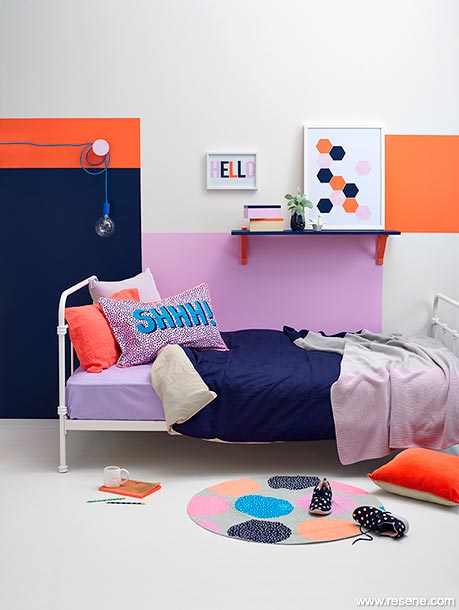
Color blocking is a creative way to divide a shared room without adding physical barriers. Use paint, wallpaper, or bedding in different tones to visually separate each child’s side while maintaining a coordinated overall palette.
Choosing complementary colours helps the room feel lively and playful without becoming chaotic. Add matching furniture or rugs to create balance between both sections of the space.
This idea allows siblings to express individuality while keeping the room stylish, cohesive, and visually organized.
15. Shared Closet Organization System

A well-organized shared closet can dramatically improve the functionality of a shared kids’ bedroom. Separate hanging sections, labeled bins, and individual drawers help reduce clutter while making it easier for siblings to manage their own belongings independently.
Using matching storage baskets and coordinated organizers helps the closet feel cleaner and more visually appealing. Open shelving can also display shoes, books, or toys while maximizing vertical storage space.
This practical setup creates better organization while helping the room feel calmer and easier to maintain daily.
16. Shared Room with Statement Wallpaper
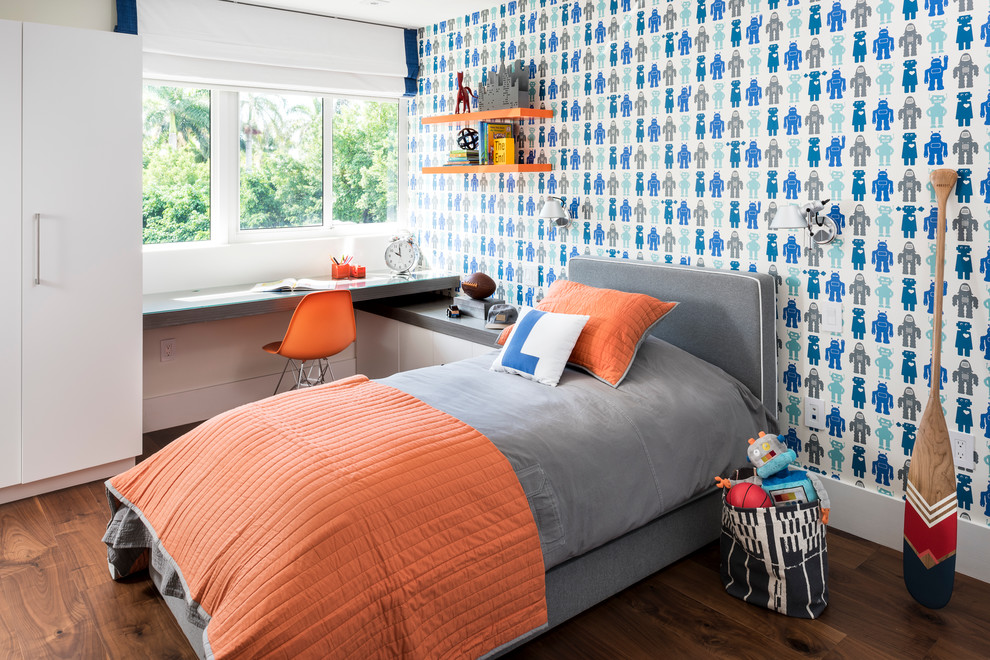
A statement wallpaper wall can instantly elevate a shared bedroom while helping unify the overall design. Bold prints like stars, stripes, abstract shapes, florals, or playful murals create a strong focal point that makes the room feel thoughtfully styled.
Keeping furniture simple allows the wallpaper to stand out without overwhelming the space. Matching bedding or accent colours can help tie both sides of the room together naturally.
This idea adds personality and visual interest while making the room feel more polished and designer-inspired.
17. Twin Beds with Shared Nightstand

Twin beds with a shared nightstand create a classic and symmetrical layout that feels neat and visually balanced. A central table between the beds provides shared storage for books, lamps, and nighttime essentials without taking up too much space.
Matching bed frames help create harmony while personalized bedding gives each sibling individuality. Layered rugs, wall art, and coordinated lighting complete the setup beautifully.
This layout works especially well in rectangular bedrooms where creating symmetry helps the room feel larger and more organized.
18. Cozy Shared Attic Bedroom

Shared attic bedrooms naturally feel cozy and unique thanks to sloped ceilings and tucked-away layouts. Low beds, soft lighting, layered rugs, and built-in storage help maximize the space while creating a warm and inviting atmosphere.
Using lighter wall colours and mirrors can help smaller attic rooms feel brighter and more open. Personalized bedding and separate reading lights give each child a stronger sense of ownership within the room.
This setup feels charming, functional, and especially comforting for siblings sharing a special tucked-away space together.
19. Shared Bedroom with Hanging Chairs

Hanging chairs add a playful and stylish feature that instantly makes a shared kids’ room feel more fun and relaxing. Whether suspended from the ceiling or attached to sturdy frames, these chairs create cozy spots for reading, chatting, or quiet downtime.
Use matching hanging chairs for a balanced look or choose different colors to reflect each sibling’s personality. Soft cushions and nearby rugs help make the area feel extra inviting and comfortable.
This feature adds personality and movement while creating a shared hangout space siblings can both enjoy.
20. Shared Room with Sliding Divider

Sliding dividers are a smart way to create temporary privacy in a shared kids’ room without permanently closing off the space. Wood panels, curtains, or lightweight partitions can help separate sleeping or study areas whenever needed.
When left open, the room still feels spacious and connected for shared play and activities. Matching decor and coordinated colours help both sides feel cohesive despite the divided layout.
This solution works especially well for older siblings who want a little more personal space while still sharing the same bedroom.
21. Layered Lighting for Each Child’s Bed
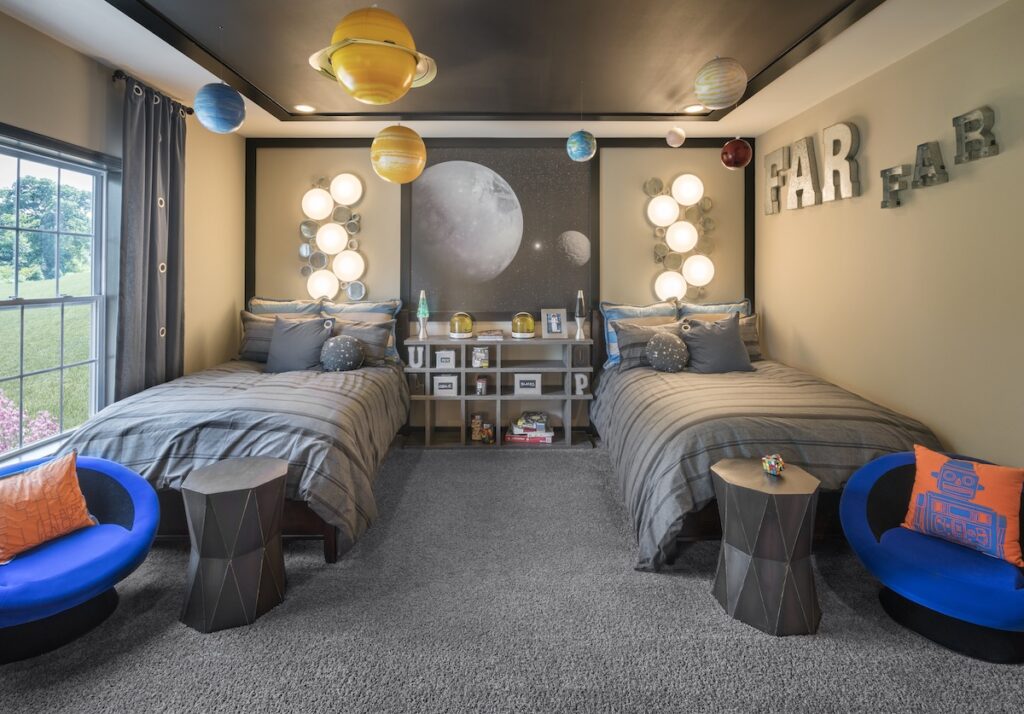
Layered lighting helps a shared kids’ room feel warm, flexible, and more functional throughout the day. Combine ceiling lights, bedside lamps, reading sconces, and fairy lights so each sibling can control lighting around their own space comfortably.
Separate reading lights are especially useful when siblings have different bedtime routines or activities. Warm lighting also helps soften the room and create a calmer atmosphere during evenings.
Thoughtful lighting design makes the shared bedroom feel more comfortable, stylish, and adaptable while adding extra personality to the overall space.
A well-designed shared kids’ room should feel organized, comfortable, and enjoyable for every child using the space. Smart furniture choices, thoughtful layouts, layered lighting, and personalized decor details can help siblings share a room without sacrificing style or functionality.
The key is creating separate zones for sleeping, studying, storage, and play while maintaining a cohesive overall design that feels balanced and inviting. Flexible decor ideas also make it easier to adapt the room as children grow and their needs change over time.
Whether the space is large or small, these shared bedroom ideas prove that practical solutions and stylish design can work together beautifully while helping siblings live more comfortably together.